Starter
$10one-time
- 100 credits one time purchase
- AI Image Generator & Video Generator
- Seedance 2.5 AI Video Generator
- HD video quality (1080p)
- Commercial use license
- Download enabled
- Email support
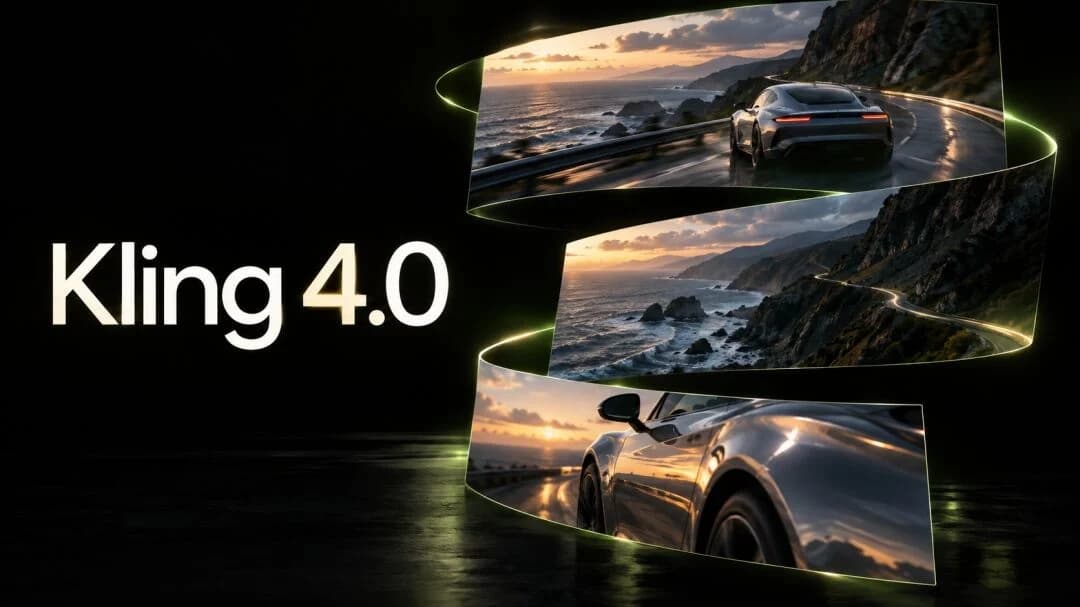
Bring ideas into focus with Kling 4.0 through longer scenes, richer visual references, and precise keyframe control for product films and cinematic stories.
Video studio: Kling 3.0 / Kling O3. Kling 4.0 is not connected yet.
Image (required)
Upload jpg, png, jpeg, webp
More room to tell a story. More ways to shape the scene.
Kling 4.0 is the latest Kling model, with a focus on longer video, richer reference inputs, and more detailed creative direction. Reported 30-second clips give an action time to unfold, while Omni Reference and multiple keyframes offer more ways to guide characters, composition, and movement.
For creators, that means a wider canvas for product reveals, character scenes, and cinematic transitions. The reported family also includes Flash and a separate Kling Image 4.0 model for still-image creation.
Choose the creative starting point that gives your scene its direction.
Describe what the viewer should notice first, what changes, and where the camera goes. A precise action gives a text-led video brief its structure: a lantern rises from a boat as the camera follows it into the evening sky.
Use the image to establish the subject and composition, then describe the motion. For a product photograph, that might be a slow camera orbit that reveals the texture while keeping the object at the center of attention.
Give each reference a purpose: one for the character, another for the location, another for the look of the scene. The reported Omni Reference workflow points toward bringing these directions together in a single video.
Explore the reported tools for longer scenes, stronger visual direction, and coordinated sound.
Reported generation of up to 30 seconds gives a reveal, camera move, or character action more time to develop. Extension to 60 seconds could carry that scene into its next beat.
Omni Reference is reported to support up to 15 elements. Combine a subject, setting, and visual style in your creative brief instead of describing every detail from scratch.
Up to 10 keyframes are reported, offering more points to guide the composition as a scene develops. Plan an opening, a turning point, and a final frame with deliberate visual continuity.
The reports mention up to three voice references and multilingual audio-video generation. This points toward dialogue-led scenes with more control over how different characters sound; supported languages and voice controls are still to be confirmed.
An experimental 120-second, 1080p mode is reported with forward and backward extension. This could provide more room for connected action and longer camera journeys, beyond the standard clip workflow.
The separate Kling Image 4.0 report describes 1-9 images per generation at up to 4K. That could help develop character looks, locations, and compositions before turning a concept into a scene. Video is reported at 1080p; 4K HDR video and 8K image claims remain unconfirmed.
Explore movement, lighting, and atmosphere as starting points for your next creative brief.
Wide-frame ideas for stories, campaigns, and cinematic sequences.
A hot air balloon floats above vineyard terraces in the morning mist.
Wild horses cross a river through drifting mist and soft morning light.
A funicular travels along a steep railway against a dramatic mountain backdrop.
A vintage biplane sits against a sunset sky, with warm light across the airfield.
Flames rise from a street-food wok in the atmosphere of a busy night market.
A marching band fills the field with movement and color.
Portrait compositions made for mobile-first storytelling.
A tailor sews fabric with careful, close-up movement.
A watchmaker works on the intricate details of a timepiece.
A snow leopard stands among the rocks of a mountain landscape.
Leaves catch the light across an autumn forest.
Sunlight falls across a wooden staircase.
A florist wraps a bouquet by hand.
Creative directions to explore with longer clips and richer reference control.
Move from the full silhouette to a close-up of a material, feature, or finish. A longer scene gives the product a beginning, a moment of discovery, and a clear final frame.
Build around a glance, an action, or a short exchange. Reference-led planning connects the character's appearance, surroundings, and voice into one creative direction.
Plan the opening image, a visual turning point, and the destination. Multi-keyframe direction could help shape transformations and camera journeys around those moments.
Explore variations in setting, lighting, and composition with the reported image model. Use those concepts to establish a visual direction for a series of videos.
Kling 4.0 is especially interesting for work that needs time, continuity, and a clear visual brief.
Give a product story room to move from context to detail. Plan a recurring visual identity across different settings, with references for the object, materials, and lighting.
Shape a scene around pacing and an emotional turn. Longer clips and keyframe direction are relevant when the path between the first and final image matters as much as the images themselves.
Develop a recognizable character across actions and environments. A coordinated set of appearance and voice references gives a series a more consistent creative starting point.
The reported direction: longer clips and more points of creative control.
| Capability | Kling 4.0 reports | Kling 3.0 context |
|---|---|---|
| Single-generation duration | Up to 30 seconds | Up to 15 seconds |
| Longer video | 60-second extension; experimental 120-second mode | Current studio offers short-clip generation |
| Reference control | Up to 15 Omni Reference elements | Reference tools vary by model and mode |
| Scene direction | Up to 10 keyframes reported | Current studio supports multi-shot planning |
| Voice control | Up to 3 voice references reported | Voice and reference features are documented for 3.0 Omni |
The clearest reported change is more room to develop a scene and more inputs to guide it. Final limits depend on the released model and the controls offered by each provider.
Start with a prompt, guide the scene with references, then review and refine your clip.
Write the subject, action, setting, and camera movement. Start with one clear moment, such as a product reveal or a character entering a new environment.
Upload a source image or supported references to guide the look of your scene. Choose the model, duration, and resolution available in the studio, then review the credit cost.
Generate your video, review the motion and composition, and adjust the prompt or references for the next version. Download the result when it fits your creative direction.
Choose a credit pack or monthly plan for your video projects.
The plans below are JXP credit packages for models currently available in the studio. Kling 4.0 access and generation pricing will be shown when supported.
Pay once and use credits anytime - they never expire
Get fresh credits every month with automatic renewal. Subscription plans offer 20% more credits compared to one-time purchases.
Quick answers about the model, video length, references, and access.
Kling 4.0 is the latest Kling model. Its reported focus is longer video generation, Omni Reference, multi-keyframe direction, and voice references. Final specifications remain unconfirmed.
The reports describe up to 30 seconds per generation and extension to 60 seconds. A separate experimental mode is reported to support 120-second, 1080p video with forward and backward extension.
Omni Reference is reported with up to 15 elements, including support for up to three voice references. The exact combination of file types and how they count toward the total still needs confirmation.
Video is reported at up to 1080p. The separate Kling Image 4.0 report mentions up to 4K images; native 4K HDR video and possible 8K image output remain unconfirmed.
We have not verified an official release date, final pricing, or a free allowance for Kling 4.0. Check the official release history for announcements and the selected provider for access details.
The studio currently offers Kling 3.0 and Kling O3, with Kling 3.0 selected by default. Its model selector, settings, and credit cost describe the generation you are using. Kling 4.0 is not connected to this studio yet.
Explore the Kling 4.0 features that could shape your next product film, character scene, or visual concept.