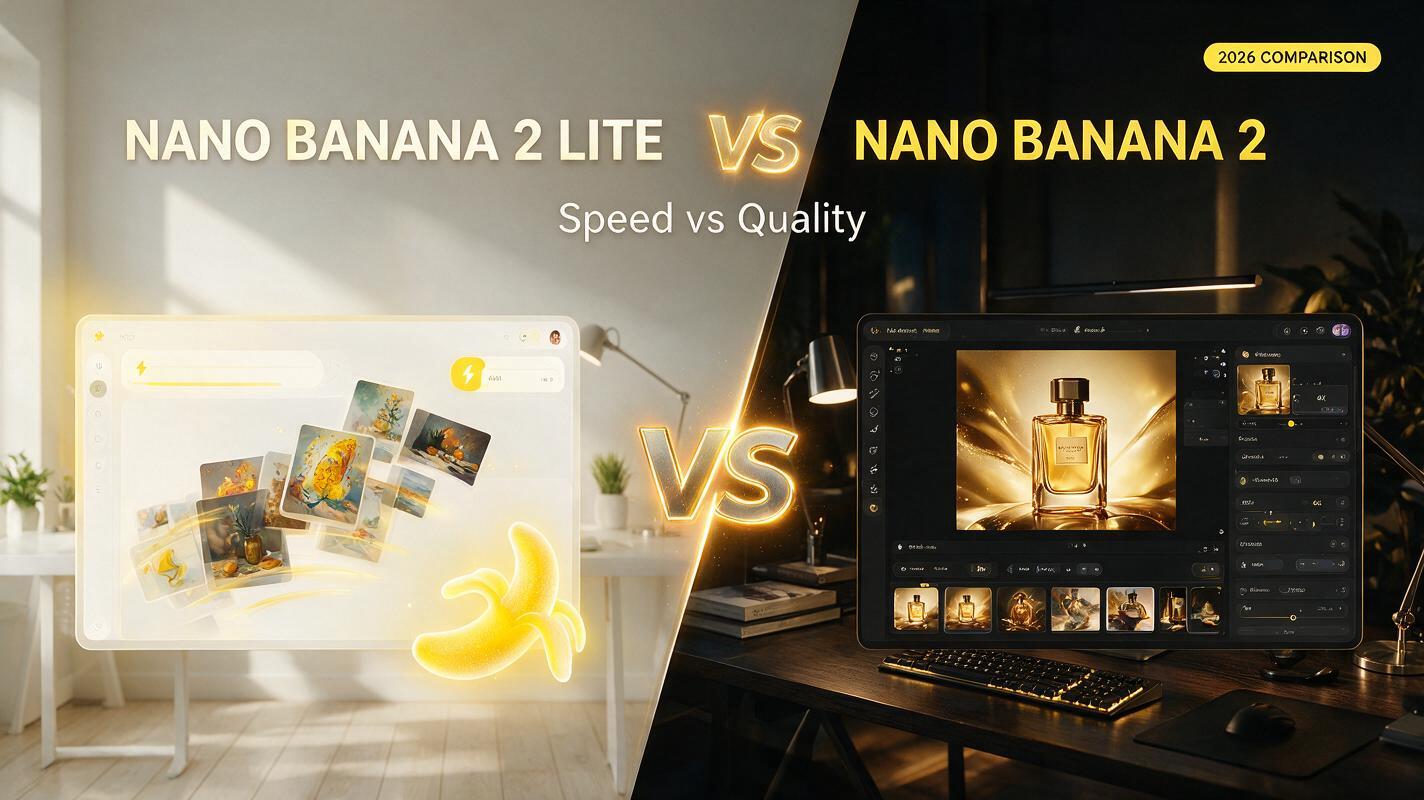
Nano Banana 2 Lite vs Nano Banana 2 is not simply a comparison between a weaker model and a stronger one. It is a choice between two AI image models designed for different stages of a creative workflow.
Nano Banana 2 Lite prioritizes speed, lower generation costs, and high-volume iteration. Nano Banana 2 offers a broader balance of image quality, prompt understanding, resolution, text rendering, reference handling, and editing control.
Both models can generate and edit images from natural-language instructions. However, Nano Banana 2 Lite is designed for rapid ideation and cost-sensitive workflows, while Nano Banana 2 is the more versatile option for complex visual tasks and production-oriented output.
This Nano Banana 2 Lite vs Nano Banana 2 comparison covers speed, resolution, image quality, text rendering, editing, reference handling, pricing, and four side-by-side creative tests.
Nano Banana 2 Lite vs Nano Banana 2: Quick Verdict
Choose Nano Banana 2 Lite when you need:
Fast 1K image generation
Lower-cost creative drafts
Many advertising variations
Social media concepts
Storyboard frames
Rapid style exploration
E-commerce background ideas
Interactive image applications
Straightforward image edits
Choose Nano Banana 2 when you need:
2K or 4K output
Complex prompt adherence
More reliable text-heavy designs
Multiple reference images
Stronger subject consistency
Search-grounded generation
Multi-step editing
Detailed product visuals
Production-ready marketing assets
The practical winner depends on where the image sits in your workflow. Nano Banana 2 Lite is usually more efficient for exploration. Nano Banana 2 is generally stronger for refinement and final delivery.
Nano Banana 2 Lite vs Nano Banana 2: Quick Comparison
Feature | Nano Banana 2 Lite | Nano Banana 2 |
|---|---|---|
Official model name | Gemini 3.1 Flash Lite Image | Gemini 3.1 Flash Image |
Main priority | Speed, cost, and scale | Versatility, quality, and control |
Best workflow stage | Drafting and exploration | Refinement and production |
Output resolution | 1K | 512px, 1K, 2K, and 4K |
Text-to-image | Supported | Supported |
Image editing | Supported | Supported |
Simple local edits | Well suited | Well suited |
Complex sequential editing | Not a primary strength | Better suited |
Multiple references | Not optimized for demanding workflows | Stronger reference processing |
Text rendering | Suitable for short text | Better for complex layouts |
Web and image search grounding | Not supported | Supported |
Standard 1K API output price | About $0.0336 | About $0.067 |
Best suited to | High-volume creators and applications | Designers, marketers, and production teams |
Google describes Nano Banana 2 Lite as its fastest and most cost-efficient current Nano Banana model, optimized for 1K image generation and fast local edits. Nano Banana 2 supports output from 512px to 4K, image and web search grounding, improved text rendering, and stronger image consistency.
What Is Nano Banana 2 Lite?
Nano Banana 2 Lite is the product name used for Gemini 3.1 Flash Lite Image. It is the efficiency-focused model in Google’s Nano Banana image family.
The model is designed for high-throughput generation, lower latency, and cost-sensitive applications. It supports text-to-image generation, image editing, common aspect ratios, and fast local changes such as background adjustments, color swaps, and sticker-style transformations.
Nano Banana 2 Lite currently supports 1K output. That resolution is sufficient for many everyday creative tasks, including:
Social media drafts
Storyboards
Thumbnail concepts
Advertising variations
Product background experiments
Internal design reviews
Mobile and web previews
Its biggest advantage is not that every first result becomes a finished campaign asset. Its value is that creators can explore more directions, reject weaker concepts earlier, and identify promising ideas without paying the higher cost for every generation.
Google also notes that the Lite model is not optimized for the most demanding multi-reference or sequential editing workflows. It is better treated as a fast creative engine than as the default model for every production task.
What Is Nano Banana 2?
Nano Banana 2 is the product name used for Gemini 3.1 Flash Image. It is positioned as the more versatile general-purpose model in the same family.
Nano Banana 2 supports text-to-image generation, conversational editing, higher-resolution output, improved text rendering, world knowledge, multiple-reference workflows, and web or image search grounding.
It supports 512px, 1K, 2K, and 4K output, giving creators more flexibility when an image moves from an early concept to a final deliverable.
Nano Banana 2 is better suited to workflows where an image must satisfy several requirements simultaneously. For example:
Preserve a product from a reference image
Place exact text in a defined position
Include several named objects
Maintain a recurring character
Follow a precise composition
Use current visual information
Survive several editing rounds
Produce a high-resolution final asset
That does not make Nano Banana 2 the automatic choice for every image. Its additional capabilities may be unnecessary when the goal is simply to generate dozens of early concepts or disposable variations.
How We Structured the Comparison
The following tests use one prompt per category and assume both models are evaluated under comparable conditions:
The same prompt
The same aspect ratio
The same 1K output resolution
The same reference image when required
No manual retouching
No external upscaling
No typography correction
Both models should be compared at 1K because Nano Banana 2 Lite currently supports only 1K output. Comparing a Lite 1K image with a Nano Banana 2 4K image would mix model capability with resolution differences.
Test 1: Photorealistic Product Advertisement
This test evaluates product geometry, material realism, lighting, composition, and commercial usefulness.
Prompt
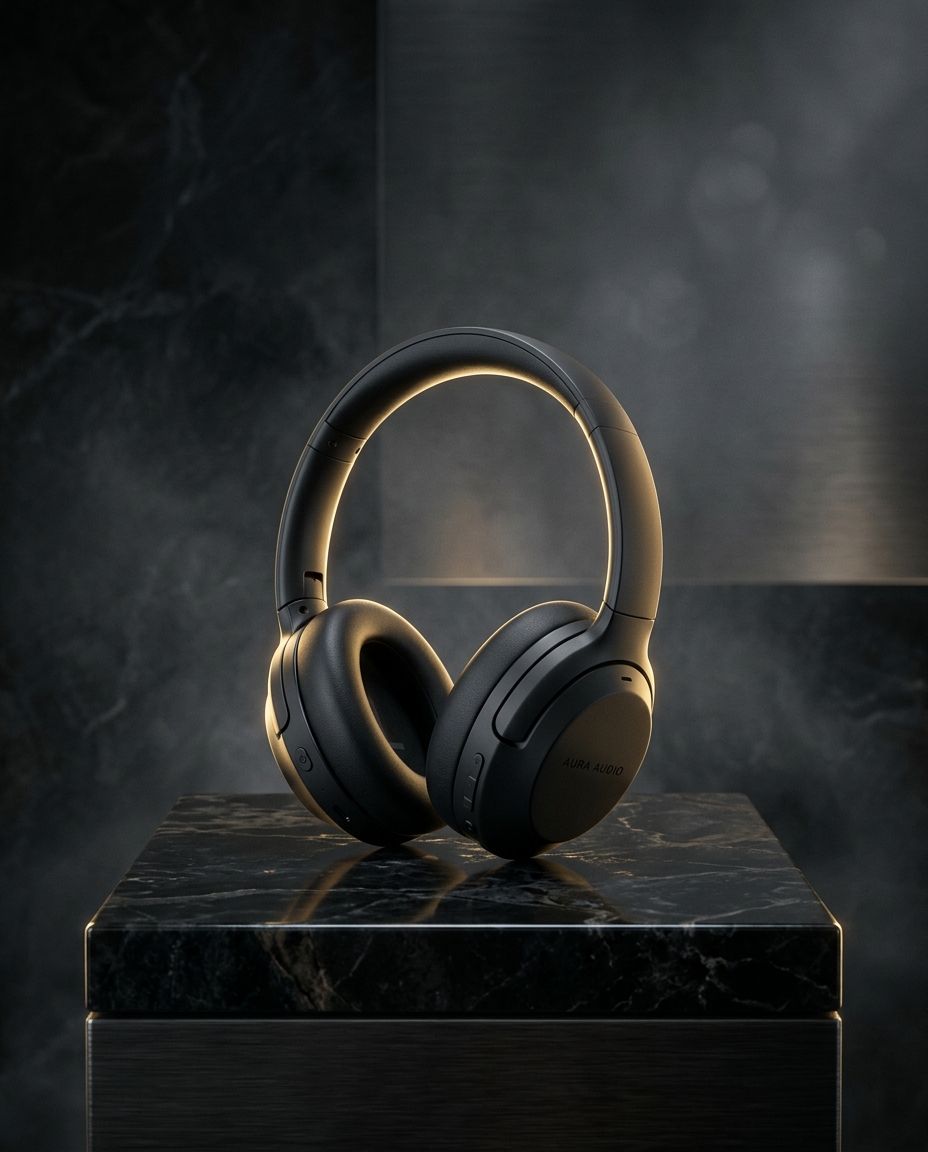
Create a premium studio advertisement for a pair of matte-black wireless headphones placed on a polished dark stone pedestal. Add soft golden rim lighting, subtle atmospheric mist, realistic reflections, and a cinematic luxury mood. Keep the headphones centered and leave clean negative space in the upper-right corner for advertising copy. Vertical 4:5 composition.
Nano Banana 2 Lite | Nano Banana 2 |
|---|---|
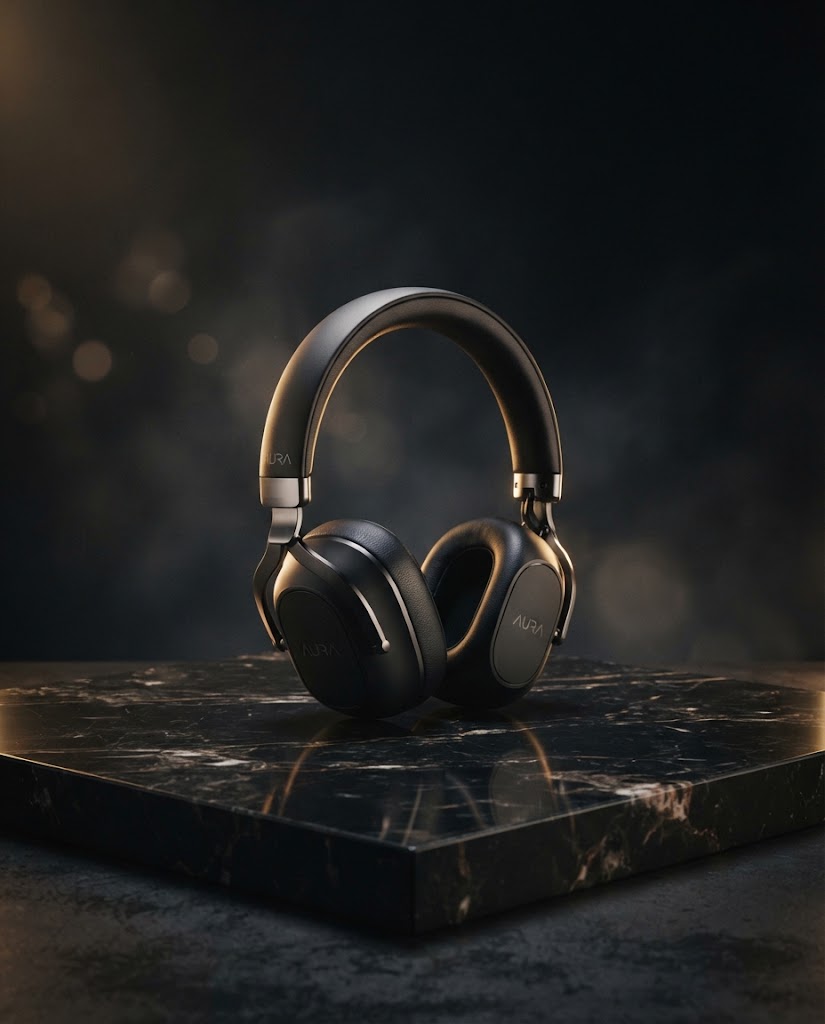 |  |
Nano Banana 2 Lite Result — 8.5/10
Nano Banana 2 Lite should produce a clean, attractive first draft with the requested dark pedestal, golden rim lighting, atmospheric background, and advertising space.
The composition should be strong enough for campaign ideation and concept selection. However, small product details, reflective surfaces, perfect symmetry, and edge quality may be slightly less controlled than in the standard model.
The Lite output is likely to be most valuable as a fast campaign draft. Its speed and lower price make it practical for testing several lighting setups, backgrounds, and compositions.
Nano Banana 2 Result — 9.2/10
Nano Banana 2 should produce more refined product geometry, richer material texture, sharper edges, and more convincing reflections.
It is also more likely to follow the lighting and negative-space requirements without adding distracting elements. Its documented improvements in image quality, consistency, instruction following, and detail make it the stronger option for a polished advertising visual.
Winner: Nano Banana 2
Nano Banana 2 wins because product advertising benefits from precise geometry, realistic materials, controlled reflections, and production-level detail. Nano Banana 2 Lite remains the better-value choice for generating multiple early concepts.
Test 2: Poster With Exact Text
This text-rendering test evaluates spelling, typography, alignment, hierarchy, and invented copy.
Prompt
Design a modern vertical technology event poster with the exact headline “CREATE WITHOUT LIMITS” and the exact subheading “AI DESIGN SUMMIT 2026.” Use bold white typography, a futuristic blue architectural background, balanced spacing, and a clean professional layout. Do not add any other words. Vertical 4:5 composition.
Nano Banana 2 Lite | Nano Banana 2 |
|---|---|
 |  |
Nano Banana 2 Lite Result — 8.2/10
Nano Banana 2 Lite should handle the short headline and subheading reasonably well. It is likely to create a clear technology-poster concept with readable main text and a suitable futuristic visual style.
Possible weaknesses include inconsistent letter spacing, uneven typography between the headline and subheading, or small decorative text that was not requested.
Because the required copy is short, the Lite result may still be usable without rebuilding the entire design.
Nano Banana 2 Result — 9.4/10
Nano Banana 2 should provide more reliable spelling, cleaner typography, stronger alignment, and a clearer hierarchy between the headline and event name.
It is also more likely to follow the instruction not to add additional words. Google highlights improved international text rendering and advanced text generation for marketing assets, diagrams, menus, and infographics.
Winner: Nano Banana 2
Nano Banana 2 wins because exact wording and layout accuracy matter more than visual style alone. Lite remains useful for short headlines and early poster concepts, but Nano Banana 2 is the safer option when the generated text must be publishable.
Test 3: Complex Multi-Object Scene
This test measures prompt adherence when several objects, colors, positions, and negative instructions appear in one request.
Prompt
Create an editorial photograph of a female travel creator sitting at a wooden café table in Paris. Place a silver laptop, a red notebook, a white ceramic coffee cup, a compact black camera, and a folded city map on the table. The Eiffel Tower should appear softly blurred through the window behind her. Use natural morning light, realistic proportions, and a horizontal 16:9 composition. Do not remove, replace, or duplicate any requested object.
Nano Banana 2 Lite | Nano Banana 2 |
|---|---|
 |  |
Nano Banana 2 Lite Result — 7.9/10
Nano Banana 2 Lite should capture the overall café setting, the travel-creator subject, and most of the requested objects.
It should also follow the morning-light and horizontal-composition instructions. The most likely weaknesses are a missing or duplicated table item, a changed object color, an unclear map, or imperfect anatomy where the person interacts with the laptop or cup.
The result may still look convincing at first glance while missing one or two specific prompt requirements.
Nano Banana 2 Result — 9.3/10
Nano Banana 2 should be more reliable at tracking the complete object list, preserving the requested colors, placing the Eiffel Tower in the background, and respecting the instruction not to duplicate anything.
The standard model’s stronger instruction following, visual reasoning, and consistency make it more suitable for a scene containing several connected requirements.
Winner: Nano Banana 2
Nano Banana 2 wins because this task depends on satisfying multiple constraints, not simply producing an attractive Paris café image.
Test 4: Reference-Based Product Editing
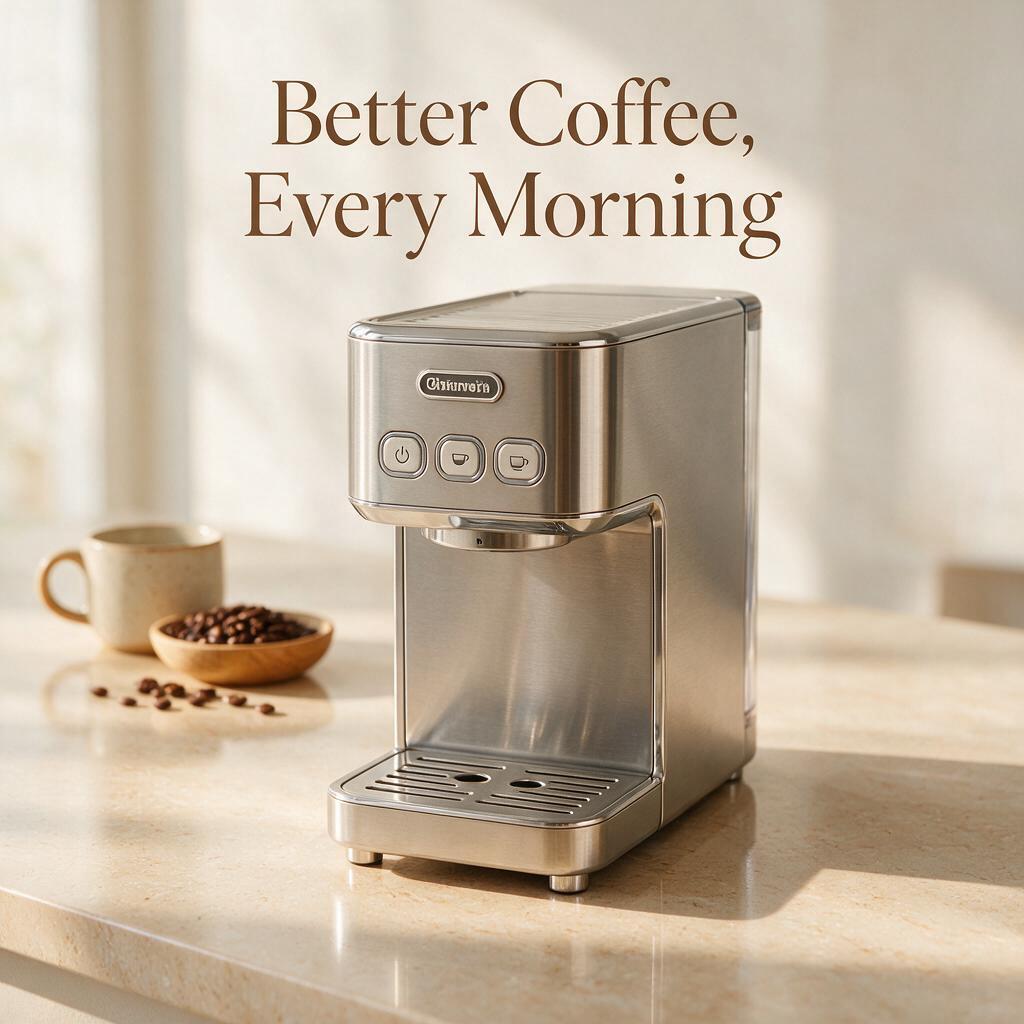
This editing test evaluates whether each model can replace an environment without redesigning the original product.
Upload the same product image to both models.
Editing Prompt
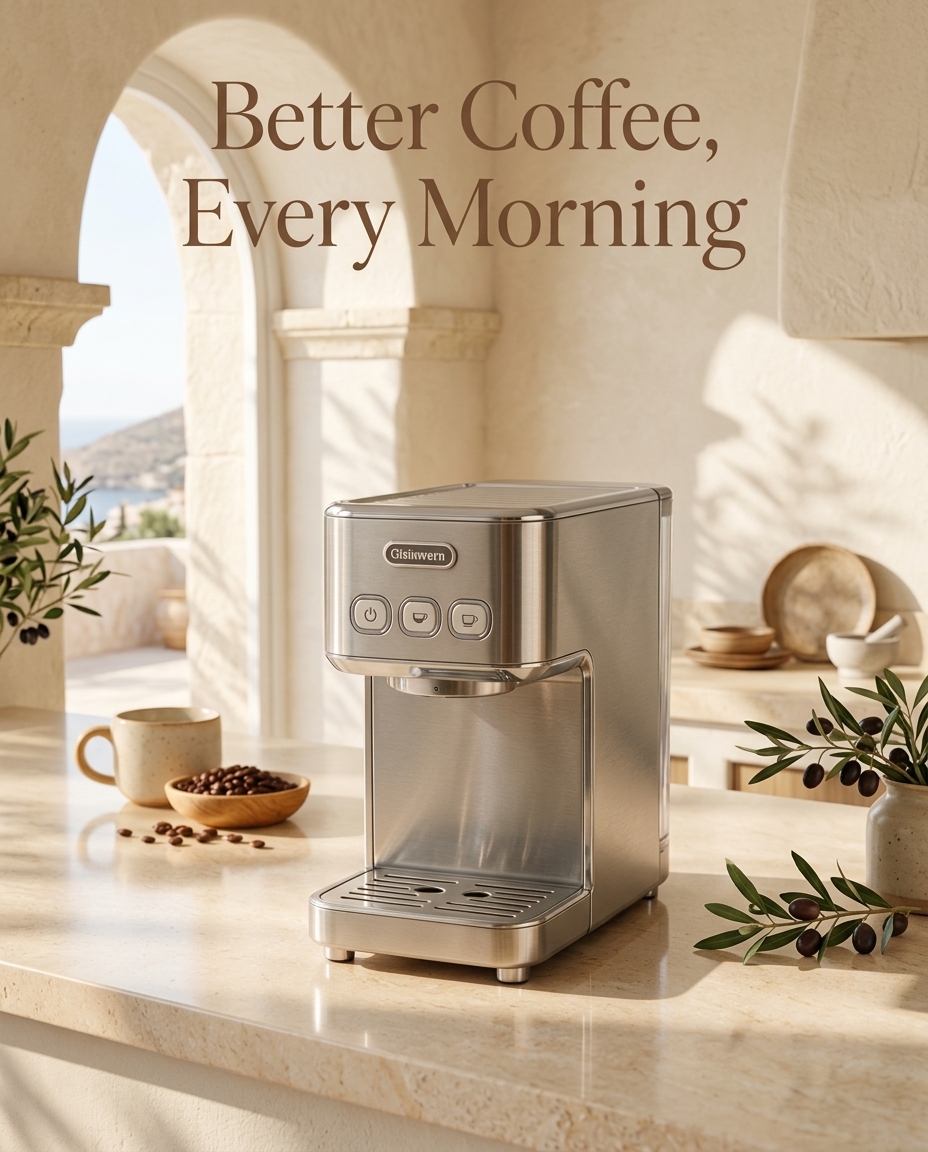
Keep the product shape, logo, printed label, colors, proportions, and packaging completely unchanged. Replace only the original background with a bright Mediterranean kitchen featuring cream-colored stone, soft morning sunlight, olive branches, and subtle natural shadows. Do not redesign the product, change the printed text, or add new packaging details.
Original Reference | Nano Banana 2 Lite | Nano Banana 2 |
|---|---|---|
 | 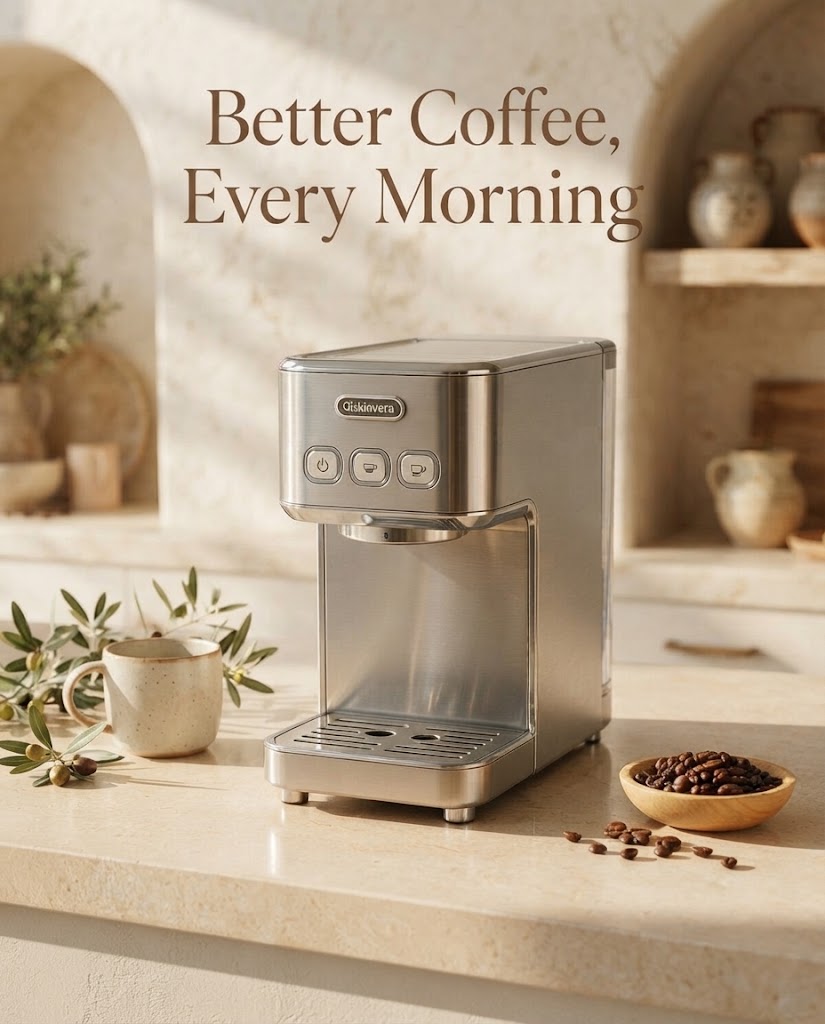 |  |
Nano Banana 2 Lite Result — 8.4/10
Nano Banana 2 Lite should perform well on this direct background-replacement task.
It is likely to preserve the primary product shape and colors while generating the requested Mediterranean environment. Small packaging text, logo edges, or fine label details may change slightly, particularly if they occupy only a small part of the source image.
For a single straightforward edit, Lite should remain highly competitive and may offer better practical value when many background variations are required.
Nano Banana 2 Result — 9.2/10
Nano Banana 2 should provide stronger product preservation, cleaner edge separation, more natural contact shadows, and more convincing integration between the original object and the new environment.
It is also more likely to preserve small printed details and packaging proportions. Google positions the standard model as the stronger choice for conversational editing, multiple references, and image consistency.
Winner: Nano Banana 2
Nano Banana 2 wins on editing fidelity and detail preservation. Nano Banana 2 Lite remains a strong option for direct edits and large batches of product-background variations.
Side-by-Side Test Summary
Test Category | Nano Banana 2 Lite | Nano Banana 2 | Winner |
|---|---|---|---|
Product advertisement | 8.5/10 | 9.2/10 | Nano Banana 2 |
Exact text poster | 8.2/10 | 9.4/10 | Nano Banana 2 |
Complex prompt adherence | 7.9/10 | 9.3/10 | Nano Banana 2 |
Reference-based editing | 8.4/10 | 9.2/10 | Nano Banana 2 |
Generation speed | 9.7/10 | 8.7/10 | Nano Banana 2 Lite |
Cost efficiency | 9.6/10 | 8.2/10 | Nano Banana 2 Lite |
Resolution flexibility | 7.5/10 | 9.6/10 | Nano Banana 2 |
Drafting value | 9.4/10 | 8.7/10 | Nano Banana 2 Lite |
Production value | 8.1/10 | 9.4/10 | Nano Banana 2 |
Overall Capability Score
Nano Banana 2 Lite: 8.5/10
Nano Banana 2: 9.3/10
Overall capability winner: Nano Banana 2
Nano Banana 2 is the stronger all-purpose model because it supports higher resolutions, search grounding, improved text rendering, complex instructions, and more demanding editing workflows.
Overall Value Score
Nano Banana 2 Lite: 9.3/10
Nano Banana 2: 8.8/10
Overall value winner: Nano Banana 2 Lite
Nano Banana 2 Lite offers better value when 1K output is sufficient, images are being generated at scale, or most outputs are temporary concepts rather than final assets.
Best Workflow
Winner: Use both models
Nano Banana 2 Lite wins the early exploration stage. Nano Banana 2 wins the final refinement stage.
Generation Speed
Speed is Nano Banana 2 Lite’s clearest advantage.
Google describes it as the fastest and most cost-efficient image model in the current Nano Banana family. Its model documentation emphasizes ultra-low latency and high-throughput generation, although actual performance will vary by platform traffic, prompt complexity, and image inputs.
Faster generation changes how creators work during early ideation. Most early images will never be published. They are created to answer questions such as:
Which composition is strongest?
Which background suits the product?
Which style fits the campaign?
Which camera angle feels more premium?
Which concept deserves further development?
Using the more capable model for every early experiment can increase cost without improving the final creative decision.
Speed advantage: Nano Banana 2 Lite
Resolution and Output Flexibility
Nano Banana 2 Lite currently supports 1K output. Nano Banana 2 supports 512px, 1K, 2K, and 4K output.
One-kilopixel output is normally sufficient for:
Social media drafts
Storyboards
Internal reviews
Thumbnail concepts
Advertising tests
Mobile previews
Small web graphics
Higher resolutions are more useful for:
Website hero images
Detailed product pages
Large advertisements
Presentation backgrounds
Cropping and reframing
Print preparation
Assets requiring additional editing
Higher resolution does not automatically improve composition or prompt accuracy. However, it gives creators more flexibility when an image moves from concept to delivery.
Resolution advantage: Nano Banana 2
Nano Banana 2 Lite vs Nano Banana 2 Pricing
Google currently lists Nano Banana 2 Lite at approximately $0.0336 per standard 1K API output, while Nano Banana 2 costs approximately $0.067 per standard 1K output. Batch pricing is lower for both models.
That makes the standard Lite output price approximately half the standard Nano Banana 2 price at the same resolution.
Monthly 1K Images | Lite API Output Cost | Nano Banana 2 API Output Cost |
|---|---|---|
100 | About $3.36 | About $6.70 |
1,000 | About $33.60 | About $67.00 |
10,000 | About $336.00 | About $670.00 |
These figures illustrate direct Google API image-output pricing. They do not represent JXP credit pricing or the total cost of a complete creative workflow.
The cheaper image is not always the cheaper result. If Lite requires several retries or manual corrections, Nano Banana 2 may provide better total value for a difficult task.
The opposite is also true. Using Nano Banana 2 for thousands of disposable drafts can consume budget without improving the final creative decision.
Unit-price advantage: Nano Banana 2 Lite
Best Use Cases for Nano Banana 2 Lite
Advertising Variations
Lite is well suited to testing multiple backgrounds, color palettes, formats, seasons, and campaign directions before selecting a final concept.
Social Media Concepts
Social posts, thumbnails, vertical graphics, and content-calendar drafts often benefit more from rapid iteration than from 4K output.
Storyboards and Previsualization
Storyboards communicate framing, action, mood, and shot order. They rarely require maximum resolution.
E-Commerce Drafts
Product teams can explore lifestyle settings, category banners, listing-image ideas, and promotional backgrounds before creating final assets.
Interactive Image Applications
Lower latency benefits prompt tools, style explorers, educational applications, avatar products, and other experiences where users expect rapid visual feedback.
Best Use Cases for Nano Banana 2
Final Marketing Assets
Higher resolution, more reliable text rendering, and broader editing support make Nano Banana 2 better suited to images approaching final delivery.
Complex Product Photography
When product labels, materials, proportions, accessories, and identity must remain stable, Nano Banana 2 provides more control.
Character-Consistent Campaigns
Recurring characters, brand mascots, fashion series, and visual stories benefit from stronger consistency and reference processing.
Infographics and Localized Designs
Nano Banana 2 is the better fit for multilingual graphics, educational diagrams, labeled designs, and information-heavy layouts.
Multi-Step Editing
Choose Nano Banana 2 when an image must survive several editing rounds without losing its subject, layout, or previously approved details.
A Practical Workflow: Use Both Models
Many creators do not need to choose one model permanently.
Step 1: Draft With Nano Banana 2 Lite
Generate several directions quickly. Explore different styles, backgrounds, camera angles, lighting choices, and compositions.
Step 2: Select the Strongest Concept
Reject weaker outputs before investing more time or budget. Choose the image with the clearest message and strongest visual hierarchy.
Step 3: Refine With Nano Banana 2
Recreate or edit the selected concept using higher resolution, stronger references, more accurate text, or more detailed instructions.
Step 4: Review Before Publishing
Check spelling, faces, hands, logos, labels, factual information, brand colors, and image edges.
This approach lets Nano Banana 2 Lite handle high-volume exploration while Nano Banana 2 handles the smaller number of images requiring greater control.
Common Comparison Mistakes
The first mistake is comparing different resolutions. Test both models at 1K before separately evaluating Nano Banana 2 at 2K or 4K.
The second mistake is testing only simple prompts. A basic landscape cannot reveal meaningful differences in text accuracy, reference fidelity, object counting, or editing precision.
The third mistake is selecting the best result from several attempts for one model and comparing it with the first output from the other. Use the same selection method for both.
The fourth mistake is judging only visual attractiveness. A polished image can still fail by omitting an object, changing a product label, or misspelling required text.
The final mistake is declaring one universal winner. The purpose of a model comparison is to find the best balance of speed, cost, accuracy, and control for a specific task.
Final Verdict
In the Nano Banana 2 Lite vs Nano Banana 2 comparison, Nano Banana 2 Lite wins on speed, cost, rapid iteration, and high-volume drafting.
It is the better choice for concept exploration, advertising variations, storyboards, social media ideas, interactive applications, and straightforward edits.
Nano Banana 2 wins on resolution, complex prompt adherence, exact text, reference consistency, search grounding, advanced editing, and production flexibility.
It is the better choice for final marketing assets, detailed product images, recurring characters, infographics, localization, and multi-step refinement.
For many creators, the best answer is not choosing Lite or Nano Banana 2 permanently. It is using Nano Banana 2 Lite to find the idea and Nano Banana 2 to finish it.
Create your next image with Nano Banana 2 Lite on JXP
Nano Banana 2 Lite vs Nano Banana 2 FAQ
Is Nano Banana 2 Lite better than Nano Banana 2?
Nano Banana 2 Lite is better when speed, lower cost, and high-volume 1K generation are the main priorities. Nano Banana 2 is better for higher resolutions, complex prompts, reference consistency, search grounding, and advanced editing.
What is the main difference between Nano Banana 2 Lite and Nano Banana 2?
Nano Banana 2 Lite prioritizes latency, cost, and scale. Nano Banana 2 provides broader creative control, more resolution options, search grounding, improved text rendering, and stronger support for complex workflows.
Does Nano Banana 2 Lite support 4K images?
No. Nano Banana 2 Lite currently supports 1K output. Nano Banana 2 supports 512px, 1K, 2K, and 4K output.
Which model is faster?
Nano Banana 2 Lite is designed to be faster. Actual generation time varies according to platform traffic, prompt complexity, and image inputs.
Which model is cheaper?
Google’s standard API price is approximately $0.0336 for a 1K Nano Banana 2 Lite image and $0.067 for a 1K Nano Banana 2 image. JXP uses its own credit system, so the cost displayed on JXP may differ.
Which model is better for text in images?
Nano Banana 2 is generally the better option for posters, advertisements, multilingual graphics, diagrams, and complex infographics. Lite remains suitable for short and relatively simple text.
Which model is better for product images?
Use Nano Banana 2 Lite to explore product scenes, backgrounds, camera angles, and campaign concepts. Use Nano Banana 2 when product labels, materials, proportions, references, or final resolution require tighter control.
Can Nano Banana 2 Lite edit uploaded images?
Yes. Nano Banana 2 Lite supports image editing and fast local changes. It is better suited to direct edits and quick variations than to demanding multi-reference or multi-turn workflows.
Which model is better for character consistency?
Nano Banana 2 is the safer option for demanding multi-image campaigns and reference-dependent character workflows. Lite may work well for simpler variations.
Should I use both models?
Yes. Create multiple drafts with Nano Banana 2 Lite, select the strongest direction, and then use Nano Banana 2 for higher-resolution output or controlled refinement.
Want to compare the standard model with Google’s professional tier?