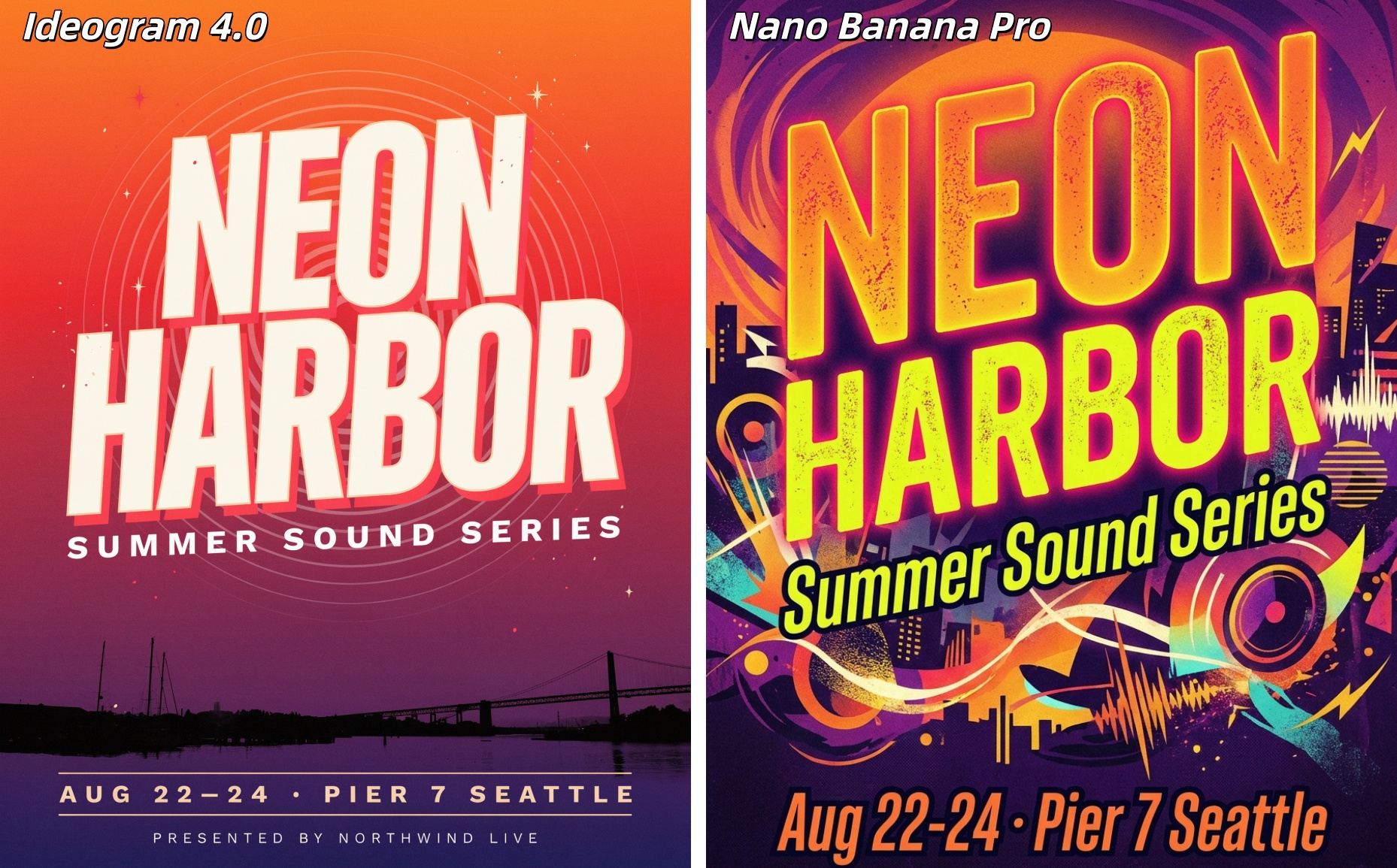
Ideogram 4.0 vs Nano Banana Pro is the matchup every designer is debating in 2026 — two text-first AI image models, both available on JXP, both claiming the cleanest typography in the business. Rather than trust the launch slides, I ran an actual Ideogram 4.0 vs Nano Banana Pro test: the same five prompts through each model, judged on text accuracy and finished quality. Ideogram 4.0 is the open-weight challenger with a 0.97 X-Omni OCR score and native 2K output; Nano Banana Pro is Google DeepMind’s closed flagship with native 4K and an advanced editing suite. Every image below was generated on JXP, and the Ideogram 4.0 vs Nano Banana Pro results were more nuanced than I expected.
→ Run your own Ideogram 4.0 vs Nano Banana Pro test on JXP
Ideogram 4.0 vs Nano Banana Pro at a Glance
Before the rounds, here is how the Ideogram 4.0 vs Nano Banana Pro matchup looks on paper. Use it to spot which model fits your workflow before reading the full results.
Ratings based on official release materials, the X-Omni OCR benchmark, the Design Arena open-model leaderboard, and hands-on testing conducted on JXP in June 2026.
Feature | Ideogram 4.0 | Nano Banana Pro |
|---|---|---|
Type | Open-weight, 9.3B params | Closed (Google DeepMind) |
Text accuracy (English) | ~97% OCR (X-Omni) | High — strong copy compliance |
Max resolution | Native 2K (2048px) | Native 4K |
Transparent PNG | ✅ Supported (best specified in prompt) | ✅ Supported (specify in prompt) |
Multilingual / CJK | Expanding — handles CJK | Strong across scripts |
Character consistency | ❌ No reference-image system yet | ✅ Up to 14 reference images |
Post-generation editing | Output only | ✅ Lighting, camera, scene edits |
Open weight / self-host | ✅ Yes (commercial license) | ❌ No (closed) |
JSON structured prompting | ✅ Bounding-box + hex palette | ❌ Plain language only |
Best for | Posters, infographics, packaging, logos | Editing-heavy, lifestyle scenes, 4K print |
The short version of the Ideogram 4.0 vs Nano Banana Pro story: an open-weight design specialist against a closed scene-and-editing generalist. Now to the actual images.
What Is Ideogram 4.0?
Ideogram 4.0 is a 9.3-billion-parameter single-stream Diffusion Transformer, released June 3, 2026 as Ideogram’s first open-weight model, trained from scratch with typographic accuracy as its core goal. It pairs a vision-language text encoder with structured-caption training, which is why Ideogram 4.0 places words inside images so accurately. It outputs natively at 2K, supports JSON bounding-box layout and hex-palette control, and ships with open weights you can self-host and fine-tune — the single biggest structural difference in the entire Ideogram 4.0 vs Nano Banana Pro comparison. On the independent Design Arena leaderboard, it ranks first among all open-weight image models.
→ Generate images with Ideogram 4.0 on JXP
What Is Nano Banana Pro?
Nano Banana Pro is Google DeepMind’s Gemini-based flagship image model — closed-source, native 4K, and built around the most advanced editing suite in this class: multi-image blending, lighting and camera control, and scene-consistent edits. Where Ideogram 4.0 is a disciplined typographic base layer, Nano Banana Pro often does more finished scene work in a single pass. Keeping that contrast in mind makes each round of this Ideogram 4.0 vs Nano Banana Pro test easier to read.
How I Tested: 5 Real Design Tasks
I kept it fair. Each prompt went to both models unchanged, with the exact text wrapped in quotes for objective spelling grading. On Ideogram 4.0, one setting matters more than any other: I used the highest-quality rendering mode and turned prompt expansion off, so the model rendered my literal text instead of an LLM rewrite of it. If your Ideogram 4.0 text ever comes out garbled, prompt expansion silently rewording your copy is almost always the cause — turning it off is the single biggest fix. I scored each round on text accuracy and finished quality. Here is the Ideogram 4.0 vs Nano Banana Pro showdown, round by round.
Round 1: Ideogram 4.0 vs Nano Banana Pro — Marketing Poster
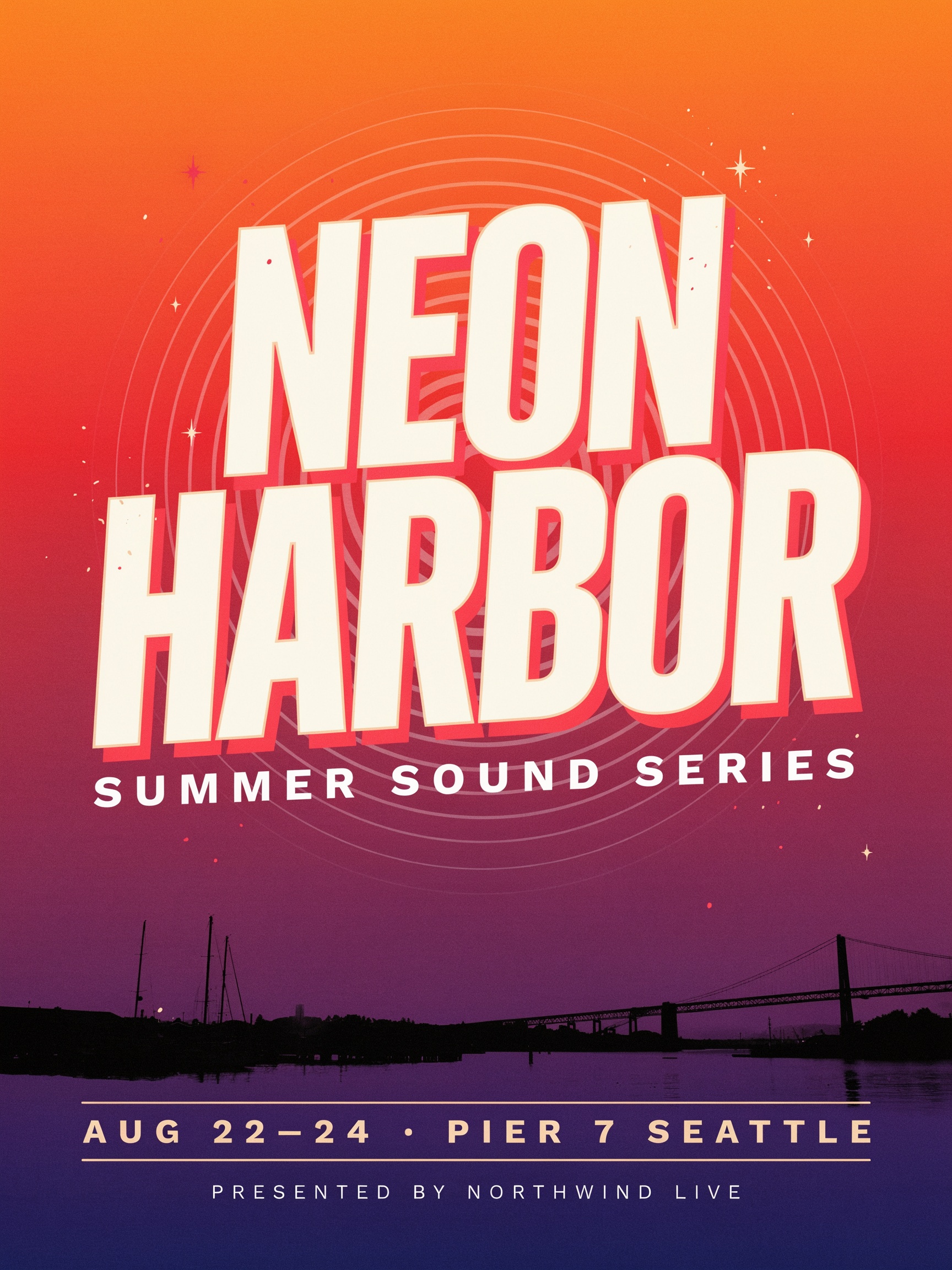
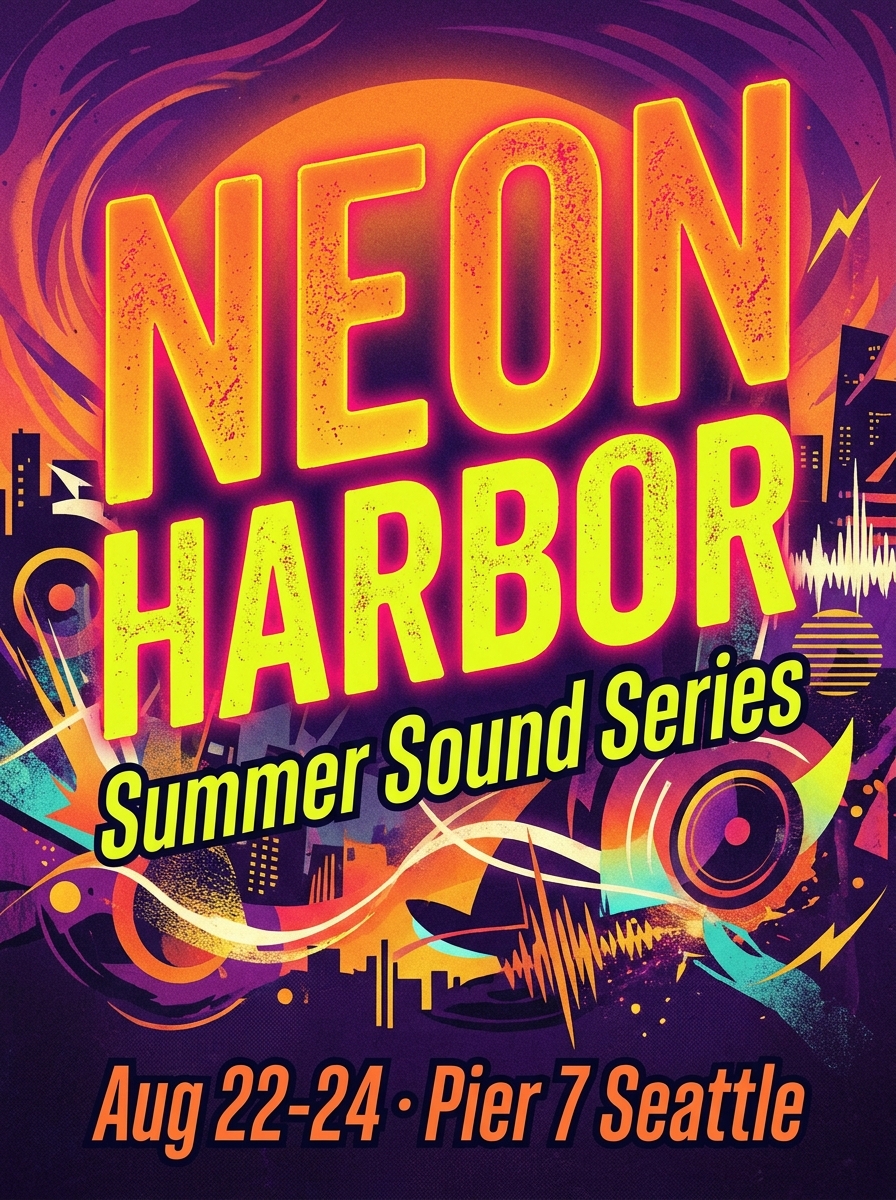
A typographic music-festival poster with a headline, a subtitle, and a detail line — three tiers of text in one frame.
Ideogram 4.0 | Nano Banana Pro |
|---|---|
 |  |
Prompt (both models):
Bold modern music festival poster, headline reads "NEON HARBOR",
subtitle reads "Summer Sound Series", detail line reads "Aug 22-24 · Pier 7 Seattle",
sunset orange and deep purple gradient, energetic layout, portrait
Both nailed every word. Ideogram 4.0 spelled “NEON HARBOR,” “SUMMER SOUND SERIES,” and “AUG 22–24 · PIER 7 SEATTLE” perfectly — and added a clean “PRESENTED BY NORTHWIND LIVE” line I hadn’t asked for, correctly spelled. Its layout is restrained and disciplined: big confident type over a clean harbor silhouette, the kind of base a designer can build on. Nano Banana Pro spelled everything correctly too, but went maximal — neon outlines, city skyline, sound-wave flourishes, a fully illustrated poster out of the box. In the Ideogram 4.0 vs Nano Banana Pro poster round, text is a tie; the split is taste: Ideogram for editorial restraint, Nano for one-prompt visual drama.
Round 1 Verdict: Draw (text tie; stylistic split)
Round 2: Ideogram 4.0 vs Nano Banana Pro — Logo and Wordmark
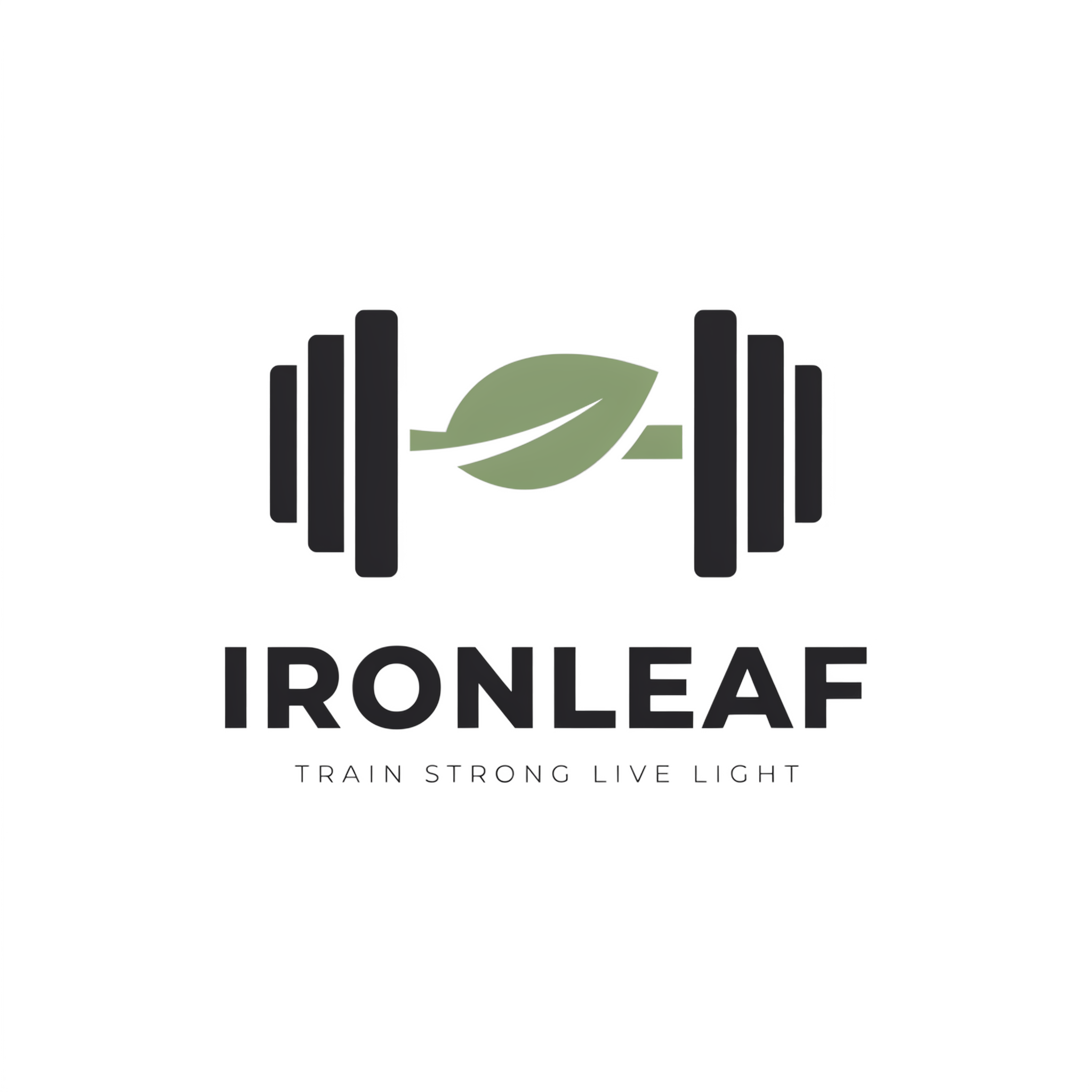
Logos are unforgiving — short text that must be exact, plus a transparent background to save a production step.
Ideogram 4.0 | Nano Banana Pro |
|---|---|
 |  |
Prompt (both models):
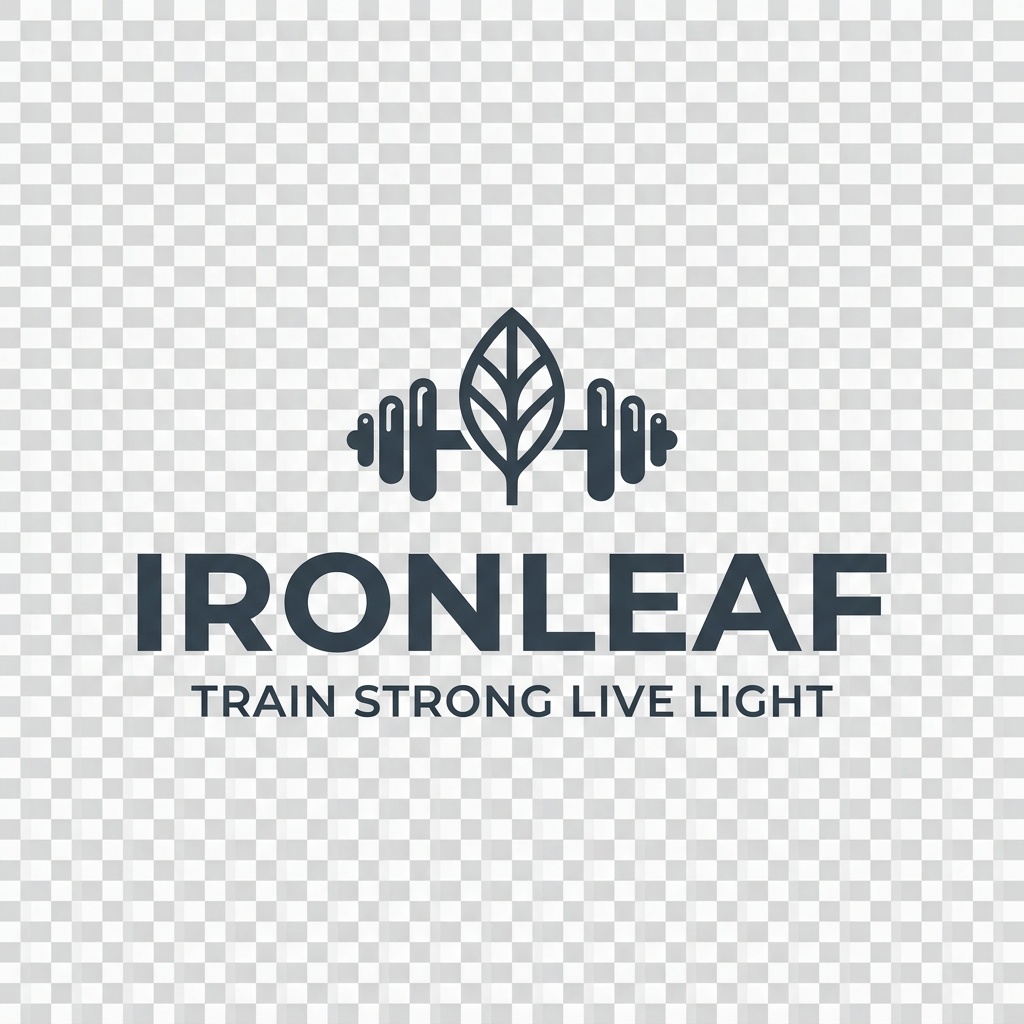
Minimal fitness studio logo on transparent background, wordmark reads "IRONLEAF",
tagline reads "Train Strong Live Light", small dumbbell-and-leaf icon above,
modern bold sans-serif, clean vector style
Both spelled “IRONLEAF” and “TRAIN STRONG LIVE LIGHT” correctly, and both produced a clean dumbbell-and-leaf mark. Ideogram 4.0’s letterforms and icon integration were strong, though on this run it placed the logo on a solid dark field rather than a transparent one — a quick re-roll with transparent background, PNG stated explicitly usually returns the cutout. Nano Banana Pro delivered a ready transparent PNG on the first try, which is the more convenient path when you need to drop the logo onto any background immediately. In the Ideogram 4.0 vs Nano Banana Pro logo round, both wordmarks are usable; Nano had the smoother transparent-output experience this time.
Round 2 Verdict: Nano Banana Pro (transparent output on the first pass)
Round 3: Ideogram 4.0 vs Nano Banana Pro — Multilingual Signage
Non-Latin script is where many models fall apart. I tested a photoreal bakery storefront with a Chinese sign and an English label — a common brief for restaurant branding and multilingual content creation.
Ideogram 4.0 | Nano Banana Pro |
|---|---|
 |  |
Prompt (both models):
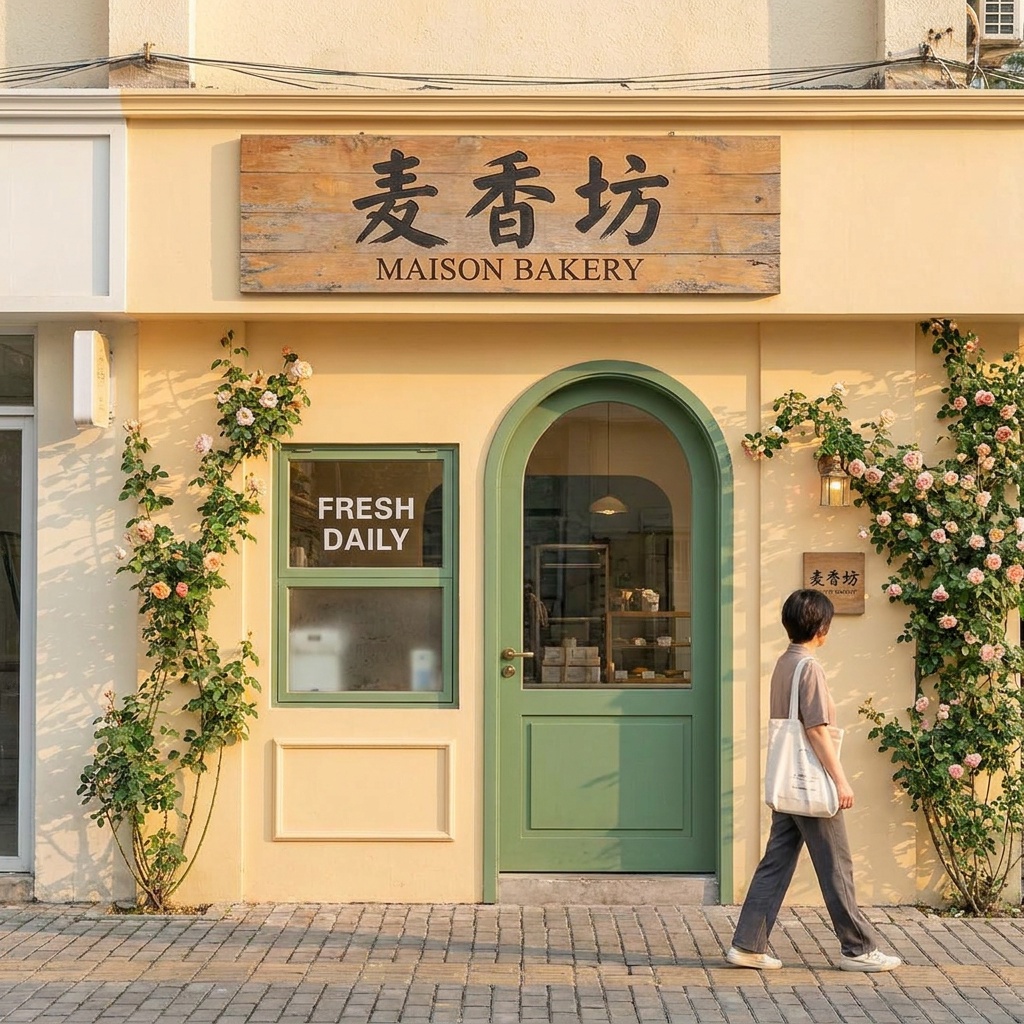
Photorealistic bakery storefront in the morning, wooden sign above the door reads "麦香坊"
with "MAISON BAKERY" beneath it, small window decal reads "FRESH DAILY",
soft sunlight, warm pastel facade, street photography
The headline finding for the Ideogram 4.0 vs Nano Banana Pro multilingual round: both rendered the Chinese characters “麦香坊” correctly — the make-or-break result for any CJK signage work. Ideogram 4.0 produced a warm, atmospheric scene with the correct Chinese sign and a readable “FRESH DAILY” decal, though its “MAISON BAKERY” English subtitle came out slightly soft. Nano Banana Pro rendered the Chinese sign, the English label, and the “FRESH DAILY” decal all crisply inside a well-lit facade. Both are production-usable; Nano’s English line was a touch sharper on this run.
For production CJK work in either model, always verify the rendered characters with a native reader before shipping — complex scripts are the hardest case for any AI image model.
Round 3 Verdict: Draw (CJK correct on both; Nano slightly crisper English)
Round 4: Ideogram 4.0 vs Nano Banana Pro — Complex Infographic
This is the most revealing round. Dense, multi-tier text — a title, four labels, and four one-line captions — is historically where text models break down.
Ideogram 4.0 | Nano Banana Pro |
|---|---|
 |  |
Prompt (both models):
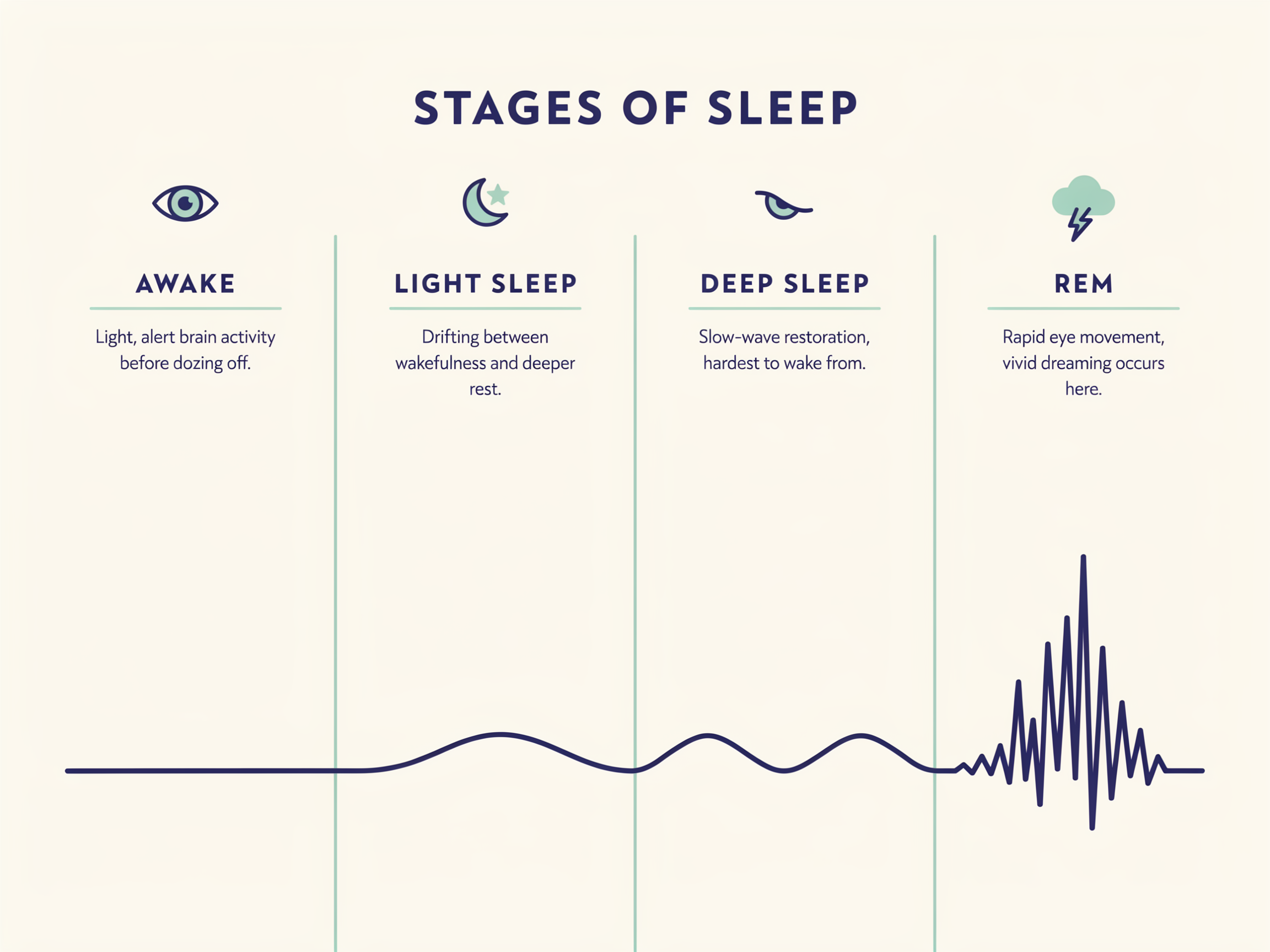
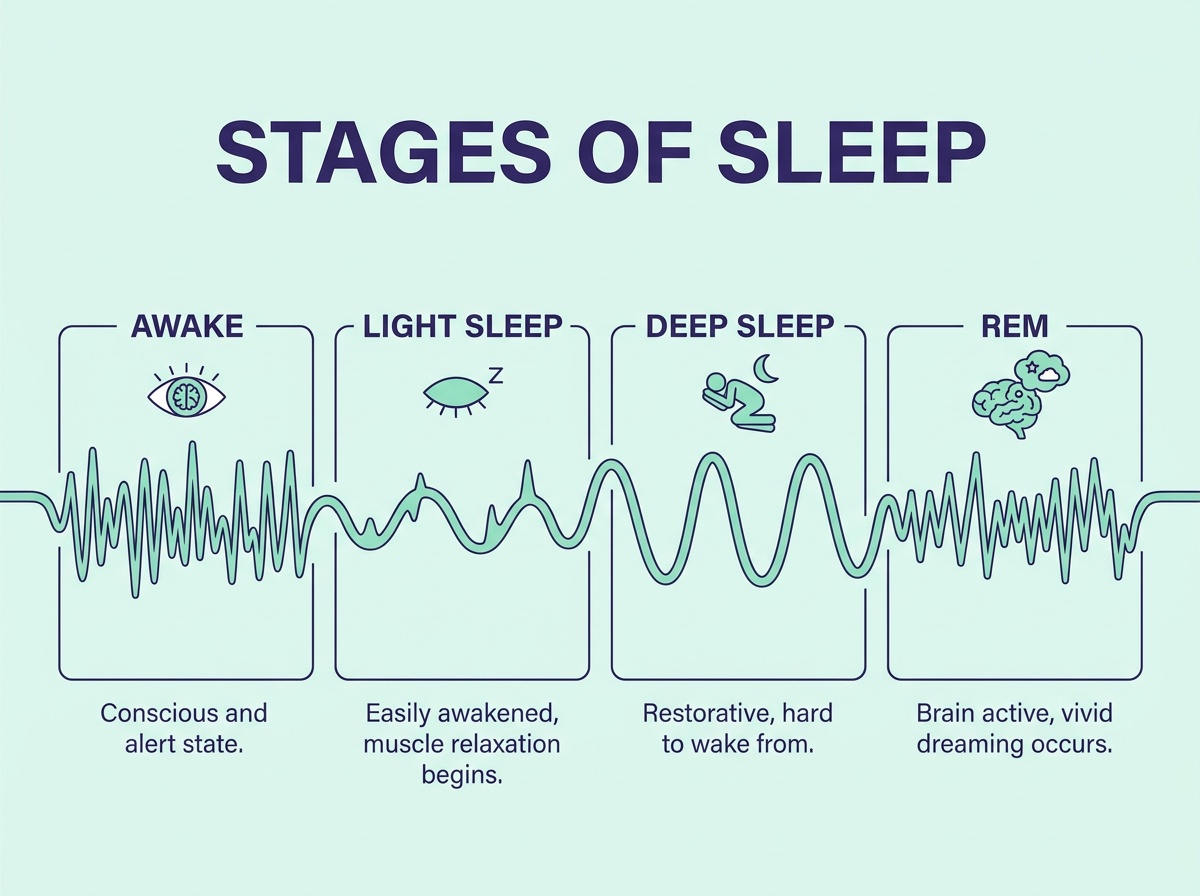
Clean educational infographic titled "STAGES OF SLEEP", four labeled stages
"AWAKE", "LIGHT SLEEP", "DEEP SLEEP", "REM" arranged left to right with a wave line,
each with a short one-line caption below, flat vector, indigo and mint palette
This is the most surprising result in the Ideogram 4.0 vs Nano Banana Pro test. Ideogram 4.0 rendered the title, all four stage labels, and all four one-line captions as real, legible copy — “Light, alert brain activity before dozing off,” “Slow-wave restoration, hardest to wake from” — inside a polished editorial layout with a clean EEG wave line. No garbled captions, no ghost characters — exactly the dense multi-caption scenario that usually trips text models. Nano Banana Pro also rendered every tier correctly, but its layout was slightly more crowded and its icons looser. For caption-heavy explainer graphics, Ideogram 4.0 had the edge here — the round that matters most for infographic designers and social educators.
→ Make a text-accurate infographic with Ideogram 4.0 on JXP
Round 4 Verdict: Ideogram 4.0 (cleanest dense multi-tier text)
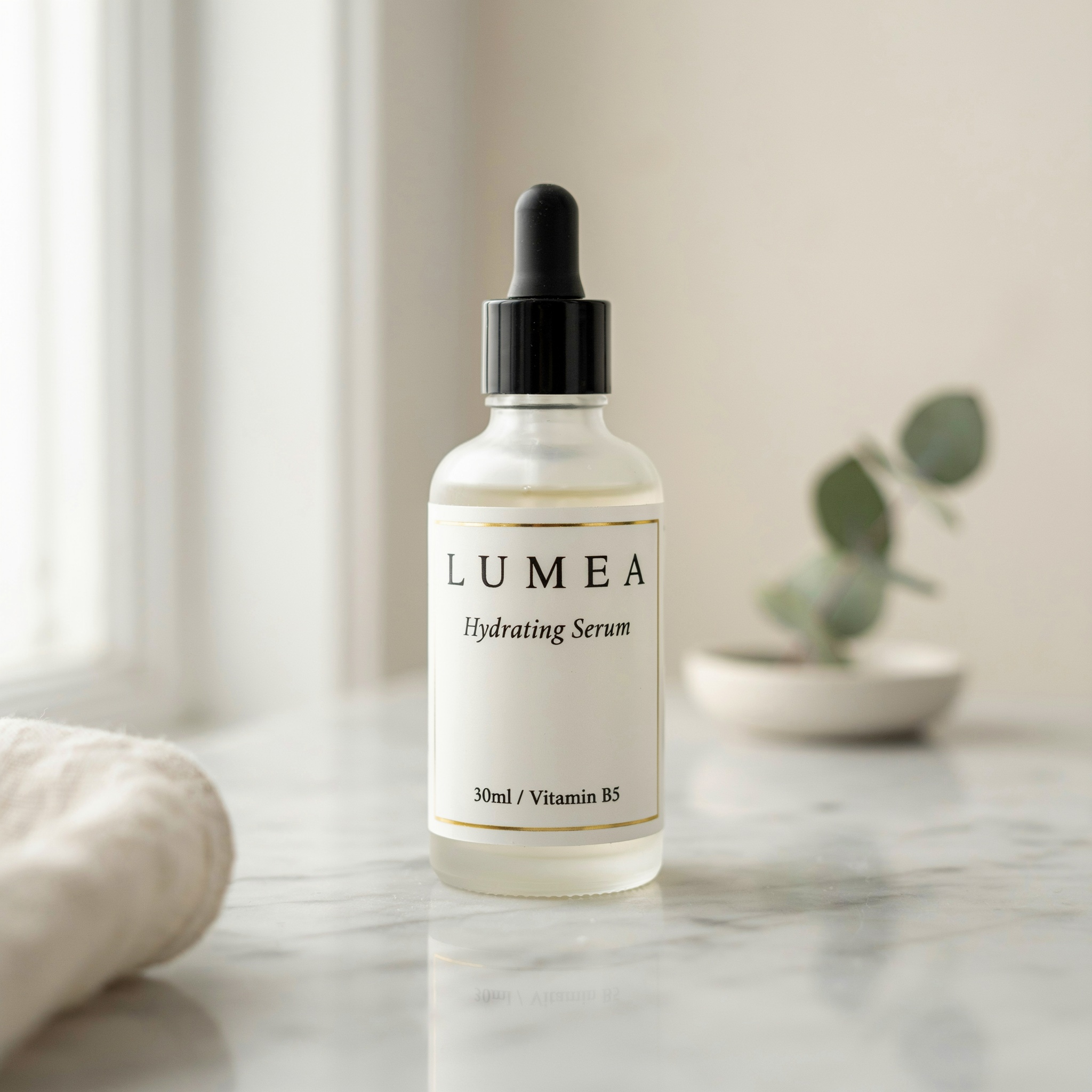
Round 5: Ideogram 4.0 vs Nano Banana Pro — Product Packaging
An e-commerce staple — a photoreal serum bottle with a brand name, a product name, and small print.
Ideogram 4.0 | Nano Banana Pro |
|---|---|
 |  |
Prompt (both models):
Photorealistic skincare bottle on a marble bathroom shelf, label reads "LUMEA" in elegant caps,
"Hydrating Serum" beneath it, small text reads "30ml / Vitamin B5",
soft natural light, shallow depth of field, premium cosmetic photography
Both models passed cleanly. “LUMEA,” “Hydrating Serum,” and the “30ml / Vitamin B5” small print rendered correctly and sharply on each. The lesson across Rounds 4 and 5 in this Ideogram 4.0 vs Nano Banana Pro test: both handle small, isolated label text reliably — text degradation is specific to dense multi-caption layouts, not small text in general. On styling, Ideogram 4.0 gave a bright, minimal studio look; Nano Banana Pro leaned into a softer lifestyle scene. Both are export-ready.
⚠️ Always proof-read prices, dates, and measurements before an asset ships. Numerical strings are the highest-risk text element for both models.
Round 5 Verdict: Draw (text tie; stylistic split)
Head-to-Head Scorecard
The honest Ideogram 4.0 vs Nano Banana Pro scorecard from five generations on JXP:
Round | Task | Ideogram 4.0 | Nano Banana Pro | Winner |
|---|---|---|---|---|
1 | Marketing poster | Text ✅ · minimal, disciplined | Text ✅ · maximal, illustrated | Draw |
2 | Logo & wordmark | Text ✅ · transparent needed re-roll | Text ✅ · transparent on first pass | Nano Banana Pro |
3 | Multilingual signage | CJK ✅ · English slightly soft | CJK ✅ · English crisp | Draw |
4 | Complex infographic | All tiers ✅ · cleanest captions | All tiers ✅ · slightly crowded | Ideogram 4.0 |
5 | Product packaging | Text ✅ · studio look | Text ✅ · lifestyle look | Draw |
Overall | 1 win · 3 draws | 1 win · 3 draws | Tie |
The real takeaway from this Ideogram 4.0 vs Nano Banana Pro comparison: text accuracy was high on both across all five rounds — the era of garbled AI type is genuinely over for these models. They traded small wins on convenience and styling rather than raw spelling. The decision becomes a question of workflow fit, not an overall champion.
Beyond the Tests: Key Differences That Decide It
The five rounds show text is largely a wash. These production-level differences are what actually separate Ideogram 4.0 vs Nano Banana Pro in daily work.
Resolution: 2K vs 4K
Ideogram 4.0 outputs native 2K (2048px); Nano Banana Pro outputs native 4K. For social media, web, and most digital formats, 2K is rarely a constraint. For large-format print — trade-show banners, billboards, high-res catalogs — Nano Banana Pro’s 4K is the safer choice. If you’re comparing Ideogram 4.0 vs Nano Banana Pro for print work specifically, resolution alone may decide it.
Transparent Background: First-Pass Reliability
Both models support transparent PNG output — the practical difference is reliability on the first pass. Ideogram 4.0 occasionally needs a re-roll when transparent output isn’t specified precisely enough; stating transparent background, PNG explicitly is the consistent fix. Nano Banana Pro delivered transparent output on the first pass in my logo test. For volume logo work where one re-roll is acceptable, Ideogram 4.0’s other advantages compensate; for workflows where first-pass cutouts are non-negotiable, Nano Banana Pro has the edge. Both beat the alternative of needing a separate background-removal tool, which older or general-purpose models often still require.
Post-Generation Editing
Nano Banana Pro includes a full editing suite — relight day-to-night, change camera angle and depth of field, blend reference images, and edit specific elements without touching the rest. Ideogram 4.0 currently iterates by re-generating. For revision-heavy client workflows, this difference in the Ideogram 4.0 vs Nano Banana Pro decision is real and meaningful.
Character Consistency Across a Series
Nano Banana Pro supports up to 14 reference images and consistent characters across a series — essential for AI influencer content, brand mascots, and product lifestyle sets. Ideogram 4.0 has no reference-image system yet. For the same face or character across multiple images, Nano Banana Pro is the only viable option of the two.
Open Weight vs Closed Model
Ideogram 4.0 is open-weight: self-host it, run it in ComfyUI, fine-tune it on brand data. Nano Banana Pro is closed, available only via hosted platforms like JXP. If owning and customizing the model matters to your workflow, Ideogram 4.0 is in a category of one — the decisive factor for many developers weighing Ideogram 4.0 vs Nano Banana Pro.
Which Should You Use? (By Creator Type)
The right pick in the Ideogram 4.0 vs Nano Banana Pro decision depends on your output, not a leaderboard score.
Your workflow | Best pick | Why |
|---|---|---|
Event posters & social graphics | Ideogram 4.0 | Disciplined, publish-ready typographic layouts |
Infographics & explainer diagrams | Ideogram 4.0 | Cleanest dense multi-caption text in testing |
Print-on-demand (quote tees, stickers) | Ideogram 4.0 | Transparent PNG drops straight into POD tools |
Product & packaging mockups | Either | Both rendered label text perfectly |
Logos needing instant transparent PNG | Nano Banana Pro | Transparent output reliably on first pass |
Multilingual / CJK signage | Either (verify copy) | Both rendered Chinese correctly |
AI influencers / character series | Nano Banana Pro | 14-image reference, multi-person consistency |
Large-format 4K print | Nano Banana Pro | Native 4K output |
Photorealistic lifestyle scenes | Nano Banana Pro | Richer scene composition in testing |
Self-hosted / fine-tuned pipelines | Ideogram 4.0 | Only open-weight option |
High-volume social media graphics | Ideogram 4.0 | Fast, minimal post-processing on text assets |
A common pro workflow uses both: Ideogram 4.0 for typographic design, posters, and infographics — Nano Banana Pro for editing-heavy or character-consistent work. Both are available on JXP with one credit balance, so routing between them adds no friction.
→ Try Ideogram 4.0 free on JXP
5 Pro Tips for Both Models
1. Quote your text exactly. Write text reads "Your Exact String" — quoted strings are treated as typographic instructions and improve accuracy in both Ideogram 4.0 and Nano Banana Pro.
2. Turn prompt expansion off in Ideogram 4.0. This is the single biggest fix for garbled Ideogram 4.0 text. Use the highest-quality mode and keep your literal copy intact rather than letting the model’s LLM layer rewrite it.
3. State transparent background, PNG explicitly for logos. Both models support transparent output; state it directly and re-roll once if the first pass returns a filled background.
4. Keep each text element to 7 words or fewer. Split long copy into a headline and a subhead. Both Ideogram 4.0 and Nano Banana Pro render short strings most reliably — accuracy drops above 7 words per element.
5. Always proof-read numbers before production. Prices, dates, percentages, and measurements are the highest-risk text for both models. Never ship a numerical asset without a human check.
Ideogram 4.0 vs Nano Banana Pro: Frequently Asked Questions
Add FAQPage Schema markup to all Q&A pairs below for Google rich result eligibility.
Is Ideogram 4.0 better than Nano Banana Pro for text rendering?
In five real-task testing, text accuracy was high on both — neither garbled a headline, a label, or Chinese signage. Ideogram 4.0 had the edge on dense infographic captions; Nano Banana Pro had the smoother transparent-PNG first-pass output. For most short-form text, treat them as evenly matched and choose on workflow fit.
Why did my Ideogram 4.0 text come out garbled?
The most common cause is prompt expansion silently rewording your copy before the model renders it. Turn prompt expansion off, use the highest-quality rendering mode, and keep each text string under 7 words. Those three steps fix the garbling in most cases.
Can Ideogram 4.0 render Chinese or other CJK text?
Yes — in the multilingual signage round, Ideogram 4.0 rendered the Chinese characters “麦香坊” correctly alongside English text. Both models handled the CJK sign well. For production CJK work, verify the exact rendered characters with a native reader before shipping.
Which is better for dense infographics with multiple text tiers?
In this test, Ideogram 4.0 — it rendered all four one-line captions cleanly in a polished layout, outperforming expectations in the scenario that usually trips text models. Nano Banana Pro was also accurate but slightly more crowded. For caption-heavy explainer content, Ideogram 4.0 is the safer bet.
Does Nano Banana Pro support 4K resolution?
Yes. Nano Banana Pro outputs natively at 4K, making it the better choice for large-format print, high-resolution campaign assets, or any deliverable where Ideogram 4.0’s 2K cap would require upscaling.
Which model can I self-host or fine-tune on my own brand data?
Only Ideogram 4.0. It ships with open weights, runs locally via ComfyUI, and can be fine-tuned on brand-specific datasets. Nano Banana Pro is a closed model — the single most consequential practical difference in the Ideogram 4.0 vs Nano Banana Pro decision for developers and technical teams.
Do I have to choose just one?
No — and most production teams don’t. A common workflow uses Ideogram 4.0 for typographic graphics, posters, and infographics, then Nano Banana Pro for editing-heavy or character-consistent work. Both are available on JXP with one credit balance, so switching adds no friction.
The Bottom Line on Ideogram 4.0 vs Nano Banana Pro
After five real tasks, the honest Ideogram 4.0 vs Nano Banana Pro verdict is that there is no overall winner — and that is the useful finding. Both render text accurately enough to ship: posters, logos, Chinese signage, infographics, and packaging all came out clean. Ideogram 4.0 stood out for disciplined typographic layouts, the cleanest dense-infographic captions, and the open-weight freedom to self-host and fine-tune. Nano Banana Pro led on first-pass transparent output, native 4K, editing breadth, and character consistency across a series. The smartest move is to keep both on JXP and route each brief to the model that fits it.